The Calm Studio Illusion: Six Ways to Read a UK Live-Dealer Table in 2026
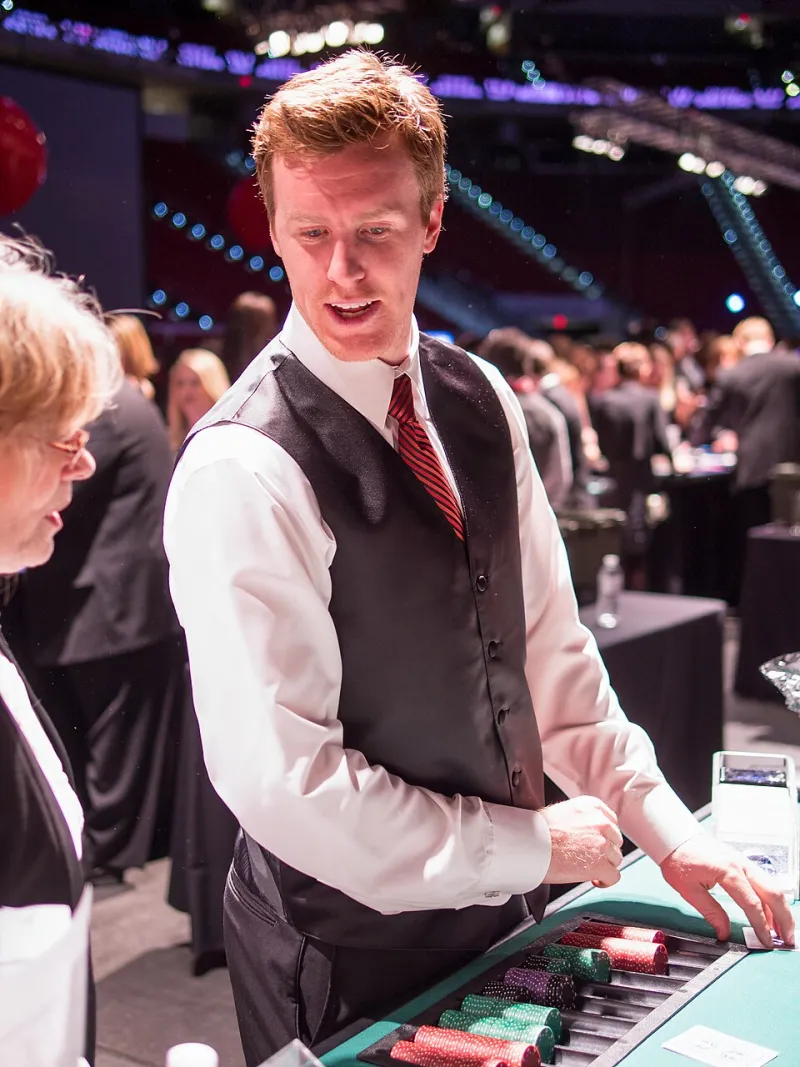
Photo: Benjamin Reed, CC BY-SA 2.0, via Wikimedia Commons
Live-dealer gaming occupies an odd position in the UK market. It is marketed as the human alternative to the machine, yet the studios behind it are among the most tightly engineered environments an online operator runs: fixed camera angles, scripted dealing patterns, timed betting windows and a presenter whose job is to keep a table moving. None of that makes the games unfair. It does mean the atmosphere of calm is a design choice rather than a guarantee, and it deserves the same scepticism a cautious player already applies to a brightly lit slot lobby.
What follows is not an argument against live tables. It is an argument for reading them properly before committing a session budget to them.
What Genuinely Changes When a Dealer Appears
Three things shift when a UK player moves from a random number generator table to a streamed one.
The first is transparency of process. You can see the shuffle, the card being drawn, the wheel being spun and the ball landing. For players who find RNG output abstract, that visibility is worth something real. It converts a result from a number on a screen into an event you watched happen.
The second is pacing you cannot control. An RNG table will deal as fast as you click. A live table runs on a dealing cycle set by the studio, with a betting window that closes whether or not you are ready. In live blackjack, a well-run table commonly delivers somewhere in the region of sixty to ninety hands an hour; live roulette tends to settle into a spin roughly every forty-five to sixty seconds including betting time. Compare that with an auto-spin RNG wheel that can complete a cycle in half the time, and the live room looks leisurely. Compare it with a player who pauses between hands, and it does not.
The third is social pressure. A presenter is watching a table, occasionally naming players, thanking them for chips. It is courteous and it is also a subtle accelerant. Being acknowledged makes it harder to sit out three hands in a row.
The Shokunin Lens: Craft Is Not the Same as Caution
Japanese craft culture has a word, shokunin, for the artisan whose standing rests on precision and repetition rather than novelty — the sushi chef who spends a decade on rice, the carpenter who planes a beam by hand. There is something genuinely admirable in a live studio that treats dealing as a craft: clean shuffles, consistent cadence, a presenter who knows when to be quiet.
But admiration is not evidence. A polished studio is optimised for throughput as well as presentation, and the two are not in conflict. Nicer production values let a table run faster without feeling rushed. That is precisely the trap. The player who reads calm as safety is reading the wrong signal.
A useful test: mute the stream for five minutes and count the hands or spins. The number you get is the number that governs your budget, regardless of how unhurried the room appeared.
Etiquette With an Arithmetic Consequence
Live tables carry conventions that RNG games do not, and each has a cost.
Commission. Live baccarat usually charges a five per cent commission on winning Banker bets, taken at settlement or built into a reduced payout. Over a long session this is not a rounding error; it is a structural drag that compounds. Players who treat Banker as the default wager should understand exactly how the operator collects it, and whether the studio deducts per hand or per shoe.
Tipping. Many UK-facing studios accept dealer tips through a dedicated button or a chip denomination set aside for the purpose. Tipping is voluntary and it comes out of your session budget, not the operator's. Treat it as a line item if you tip at all, and decide the amount before you sit down rather than in the moment.
Side bets. Live tables tend to push perfect pairs, twenty-one plus three, and similar propositions harder than the main game, because presenters are trained to mention them. These carry markedly higher house edges than the base wager. They are not forbidden; they are simply expensive.
Limits. Studio minimums vary widely, from £1 tables aimed at casual players to VIP rooms with three-figure minimums and, occasionally, maximums high enough to invite stakes that no sensible budget supports. Published limits should be visible before you buy in.
A Six-Point Studio Checklist
Before treating a live room as your regular table, run these checks.
-
Stream reliability. Does the video hold up under your connection, and does the operator publish a policy on voided or disputed hands caused by disconnection? A dropped stream mid-hand is a customer-service question, not a lucky break.
-
Published dealer and tipping rules. Are tipping mechanics and any dealer conduct rules stated in the help section rather than left to habit?
-
Limit transparency. Are table minimums and maximums shown before entry, including any difference between standard and VIP rooms?
-
Time per hand or spin. Measure it yourself. Note the betting window length and whether it is adjustable.
-
Session pacing tools. Does the operator offer a live-table-appropriate reality check, a session timer, or a loss limit that applies across studios? Live rooms are often excluded from generic tools, and that exclusion matters.
-
Exit points. Decide in advance how you will leave — a hand count, a time limit, a loss threshold — and check that leaving is simple. Some operators make it one click; others route you through a lobby of alternatives.
Where the Budget Actually Goes
A player who budgets by stake size alone will misjudge a live session, because the live variable is frequency. Sixty hands an hour at £2 is not the same exposure as twenty hands an hour at £2. The responsible-play advice that applies to slots — set a limit, set a duration, expect the money to be spent rather than returned — applies more sharply here, not less.
If a session is planned around time rather than stake, the arithmetic is straightforward: multiply your average wager by your realistic hands per hour, then decide whether that hourly figure is one you are content to lose. If it is not, lower the stake or shorten the session. The studio will not do this calculation for you, and no amount of craft on the dealer's side of the table will.
A Closing Note on Judgement
Live-dealer gaming in 2026 is a mature, well-regulated product in the UK, offered by operators licensed by the Gambling Commission and available only to adults aged 18 and over. The studios are professional, the games are audited, and the presentation is often excellent. None of that removes the obligation to judge the room rather than the mood of it. Watch the clock, count the hands, read the rules, and treat a beautiful studio as a beautiful studio — nothing more.